Portfolio item number 1
Short description of portfolio item number 1

Short description of portfolio item number 1
Short description of portfolio item number 2
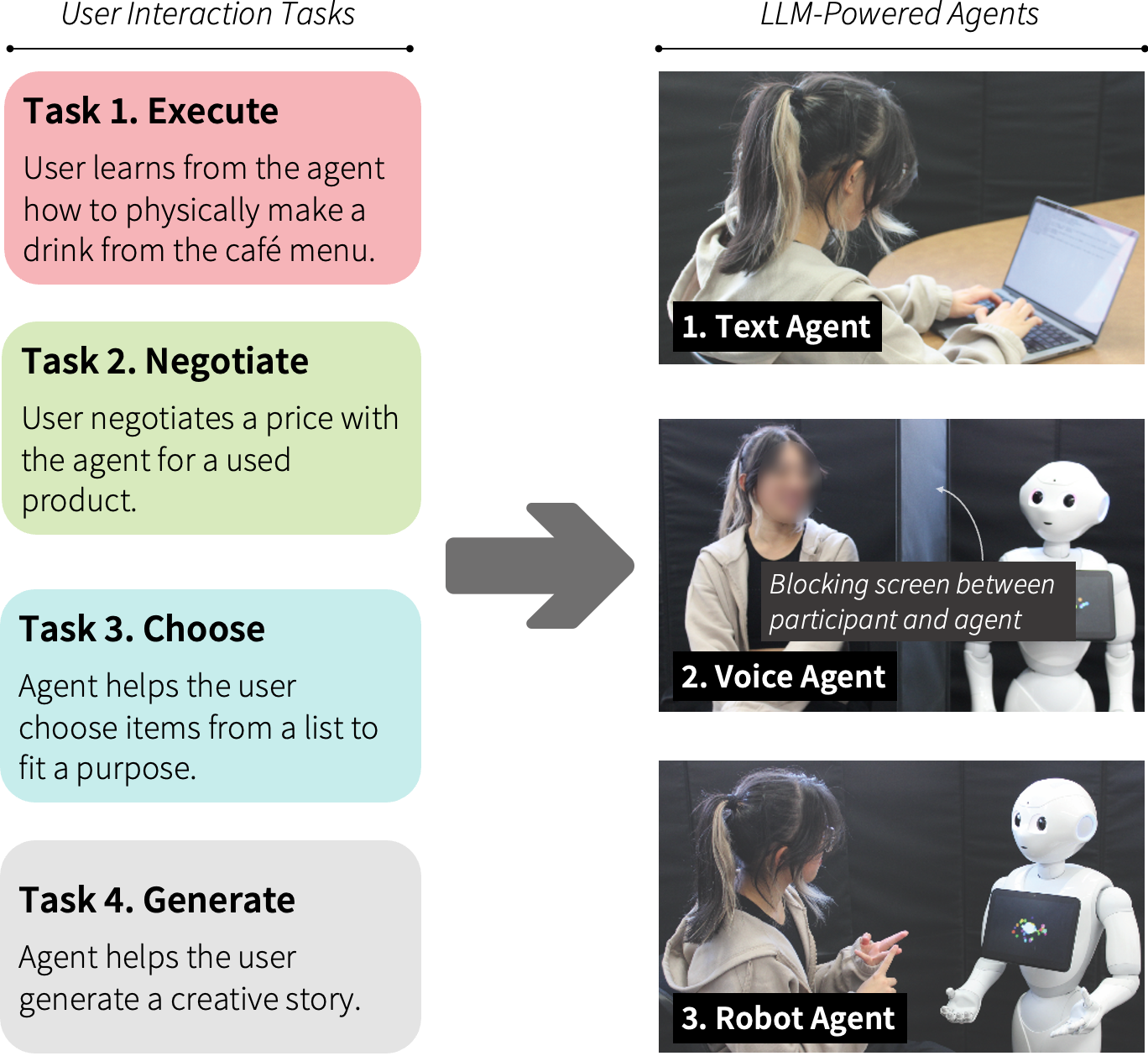
We compared an LLM-powered social robot against text- and voice-based agents in a user study with 32 participants across conversational tasks including choosing, generating, executing, and negotiating. LLM-powered robots elevated expectations for sophisticated non-verbal cues and excelled in connection-building and deliberation, but fell short in logical communication. We provide design implications for robots integrating LLMs and for fine-tuning LLMs for use with robots.
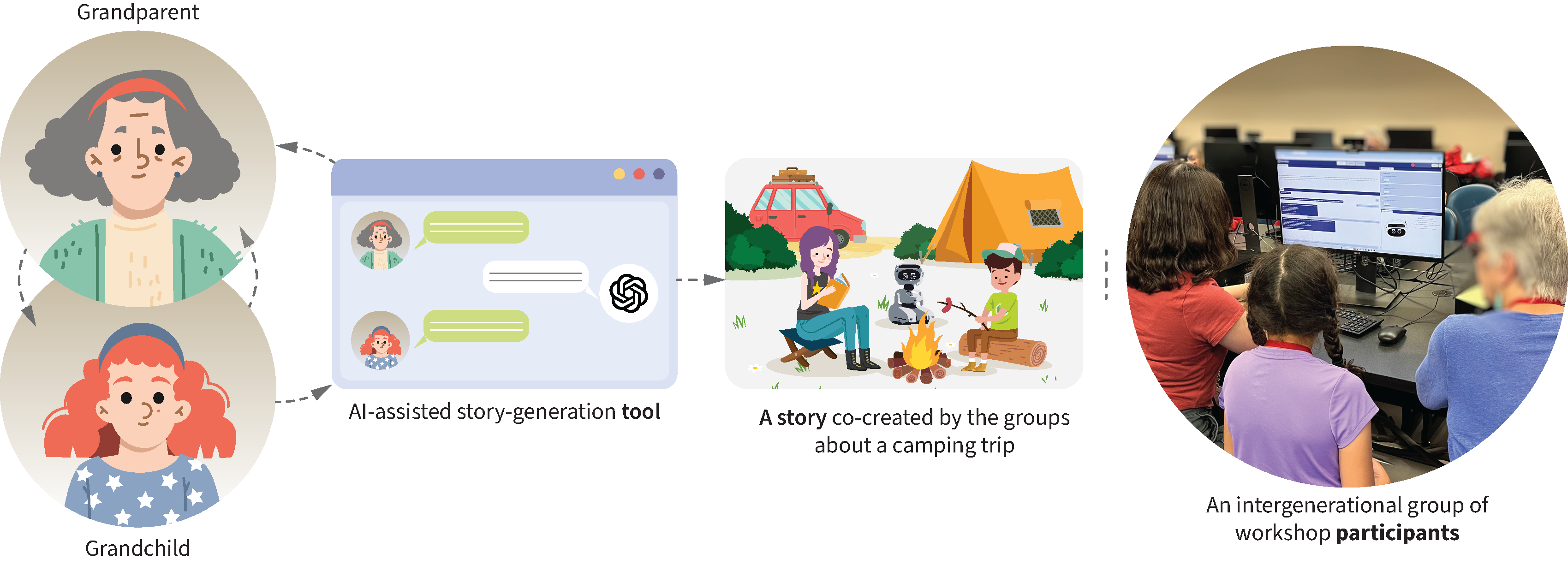
We studied how AI-supported story creation can foster intergenerational connection through a user study with 29 grandparent-grandchild groups. Grandchildren managed the technical aspects while grandparents contributed creative ideas, with AI structuring the activity and balancing contributions across generations. We offer design implications for integrating AI into intergenerational co-creative activities.
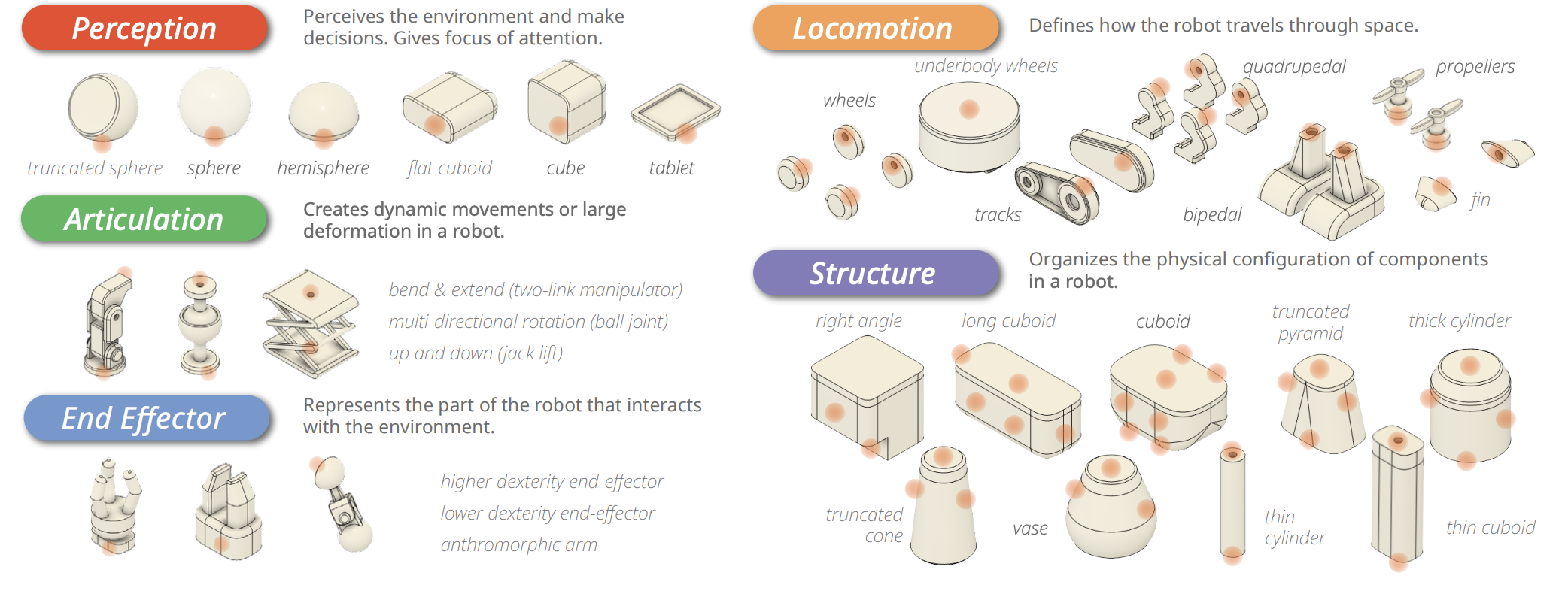
We introduce Elements of Robot Morphology, a framework identifying five fundamental elements of robot form: perception, articulation, end effectors, locomotion, and structure. We operationalize the framework with Morphology Exploration Blocks, a set of tangible blocks for hands-on, collaborative experimentation with robot morphologies. A case study and design workshops show how they support analysis, ideation, reflection, and collaborative robot design.
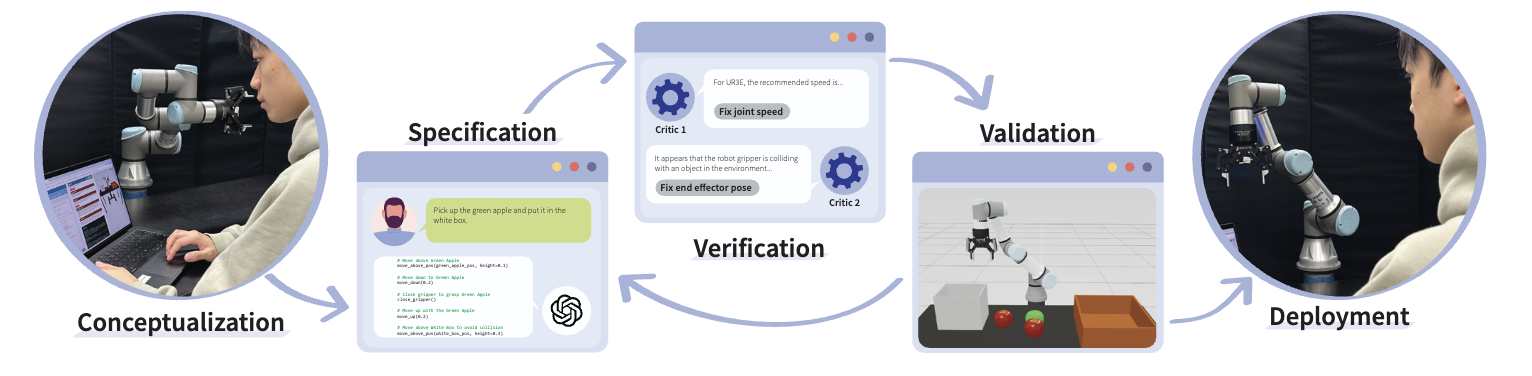
RoboCritics augments LLM-based robot programming with expert-informed motion-level critics that analyze execution traces for issues such as collisions and joint speed violations. The critics surface transparent feedback and one-click fixes that keep users in the loop. In a user study with a UR3e robot, RoboCritics reduced safety violations and improved execution quality compared to a baseline LLM interface.
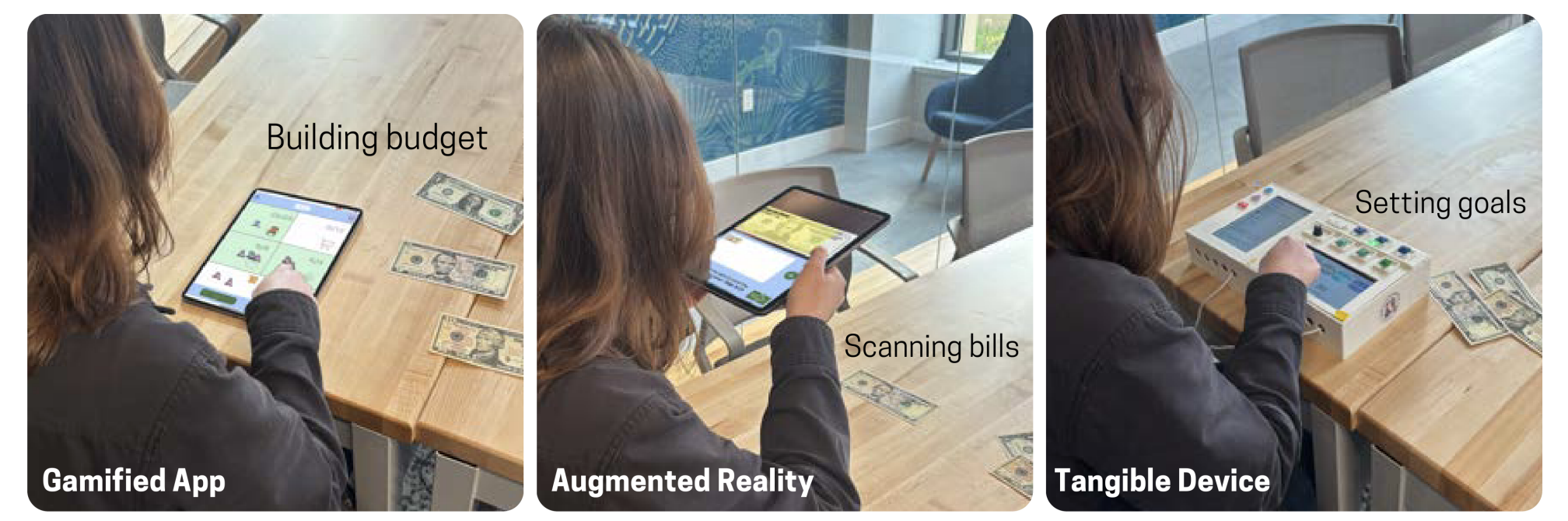
To understand how adults with Down syndrome manage money and what support they prefer, we designed three cash-based budgeting technology probes: a gamified tablet app, an augmented reality app, and a custom tangible device. Seven adults with Down syndrome used all three probes, revealing modality tradeoffs in engagement, verification, and error recovery. We offer design implications for budgeting technologies that support autonomy without collapsing interdependence.
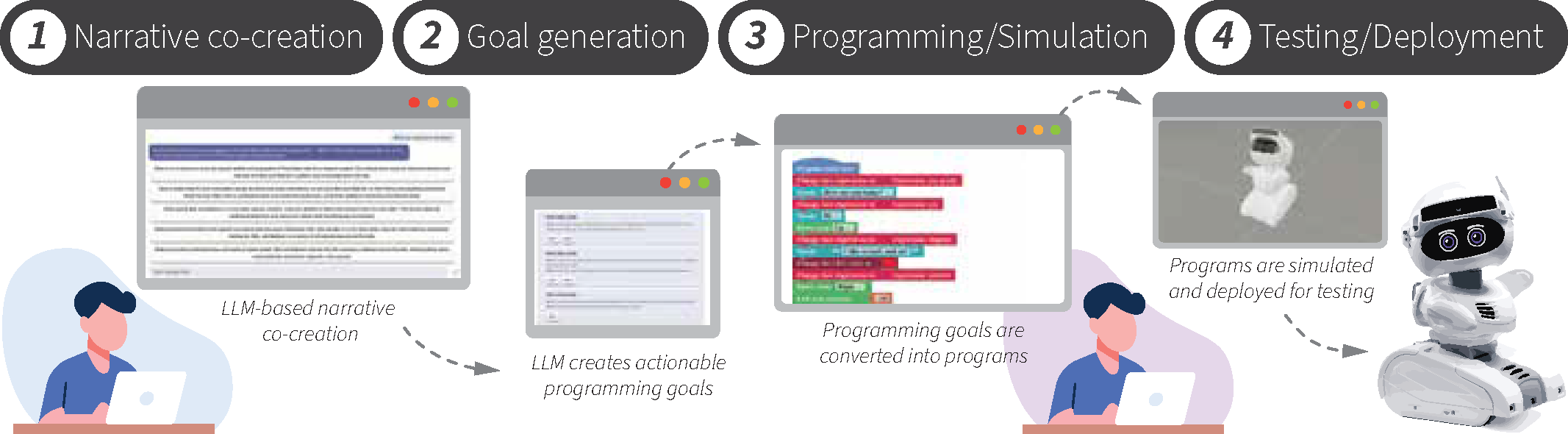
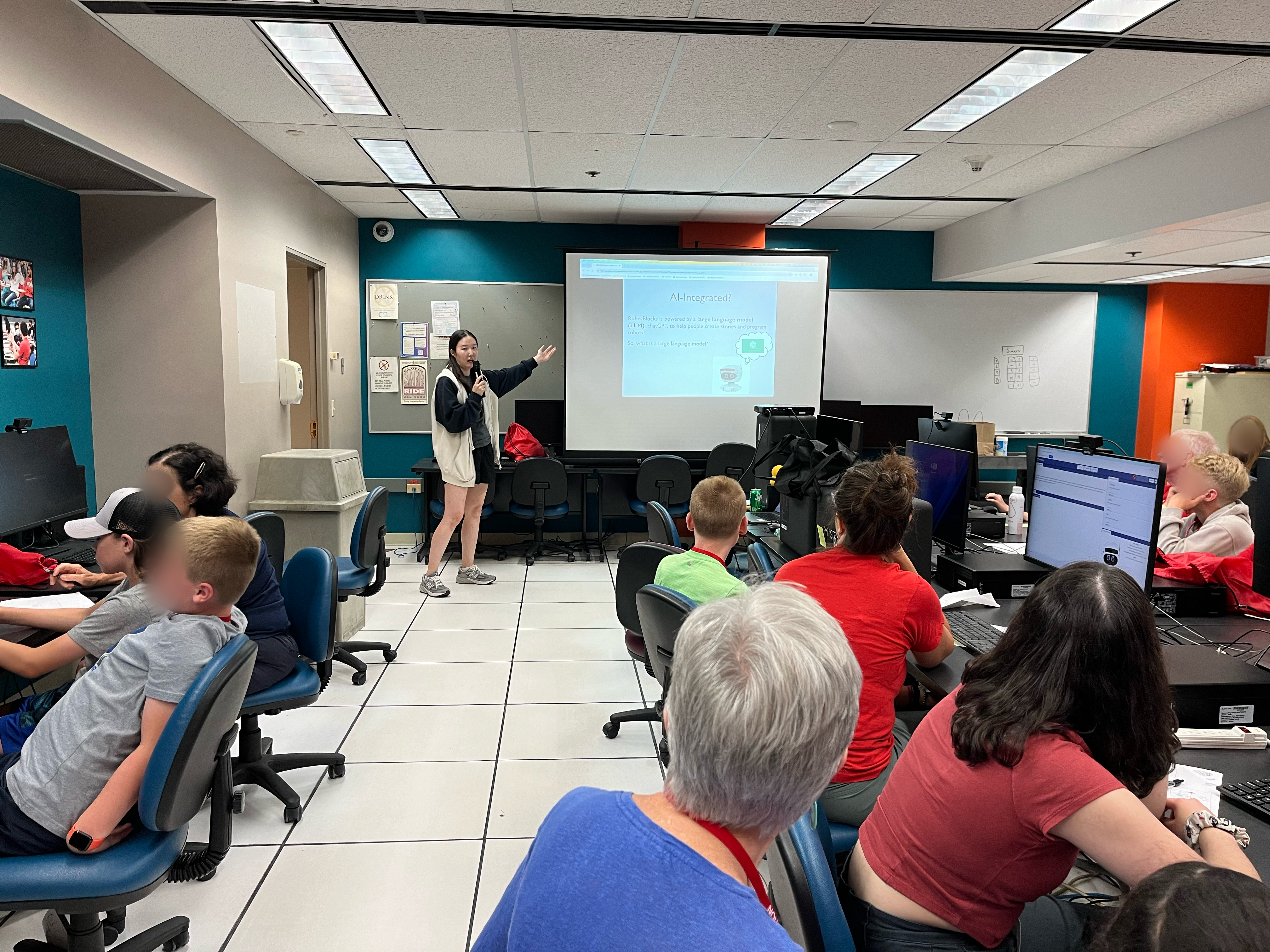
Robo-Blocks is a block-based programming environment that leverages LLMs to give novice robot programmers generative scaffolding, connecting high-level ideas to executable robot behaviors through structured narratives. Through a Research through Design process and deployment with novices, we uncovered user personas and usage patterns for generative scaffolding. We present design insights for integrating generative scaffolding into social-robot programming.
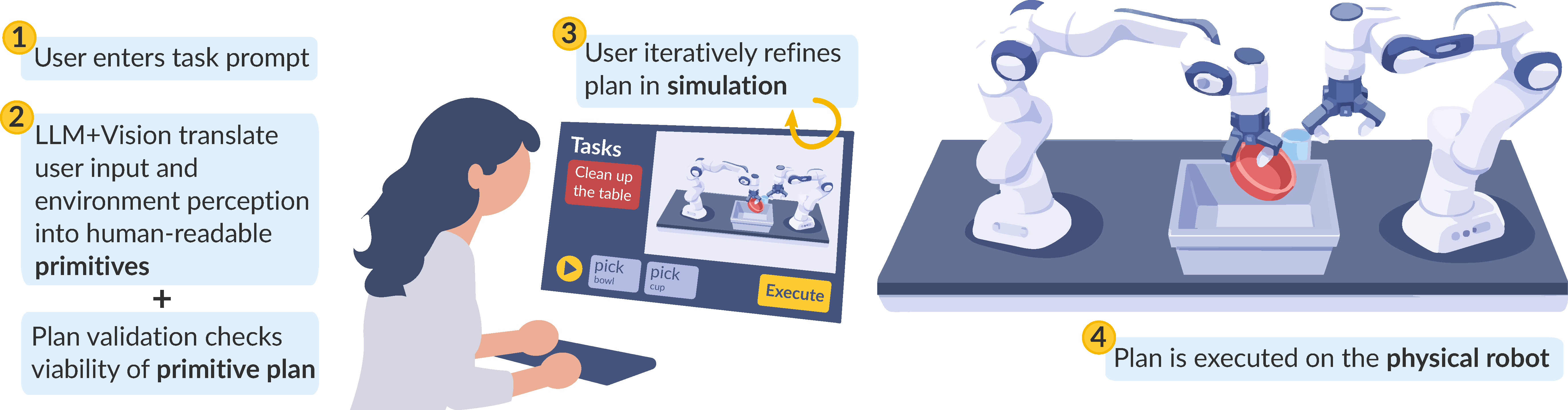
SHRIMP lets users generate hierarchical robot task plans from natural language and iteratively refine them through re-prompting and explicit correction. Users can validate plans in simulation before executing them on a physical robot. A user study with 35 participants showed improved perceived control and robot transparency.
Published:
This is a description of your talk, which is a markdown files that can be all markdown-ified like any other post. Yay markdown!
Published:
This is a description of your conference proceedings talk, note the different field in type. You can put anything in this field.
I serve as a Lecturer Student Assistant, where I teach computer science pedagogy and general teaching practices. In this role, I also train peer mentors to develop effective, inclusive mentoring skills.